Dark spotting and musty rooms near Auburn
Mold After Water Damage in Auburn, GA
Mold after water damage in Auburn, GA tends to appear as dark spotting on drywall or baseboard, a stale smell in a shut-up room, or paint lifting near an old leak. Call us and give the location and how far it reaches.
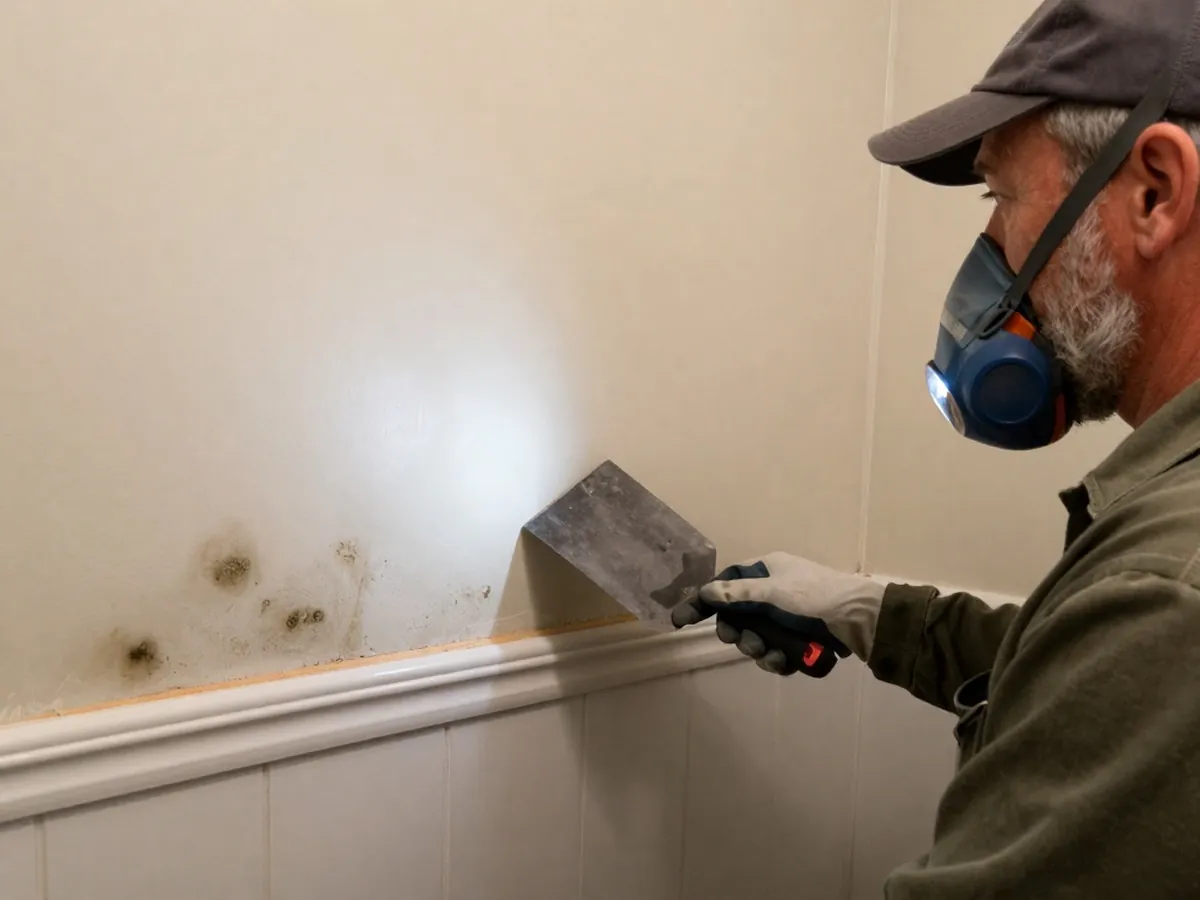
What a cut-open wall can show
Mold on the back of drywall, or on a stud behind it, cannot be seen from the room. Cutting out a section is how a contractor finds out how far it goes and whether the wood behind is wet.
The EPA adds that mold comes back if the water problem is not repaired, so the reading that matters most is the one that shows the leak has stopped.
Where the water usually started
A leak inside a wall is covered on burst pipe water damage. A stain overhead is on ceiling and wall leaks. A backup or a flood is under sewage backup cleanup.
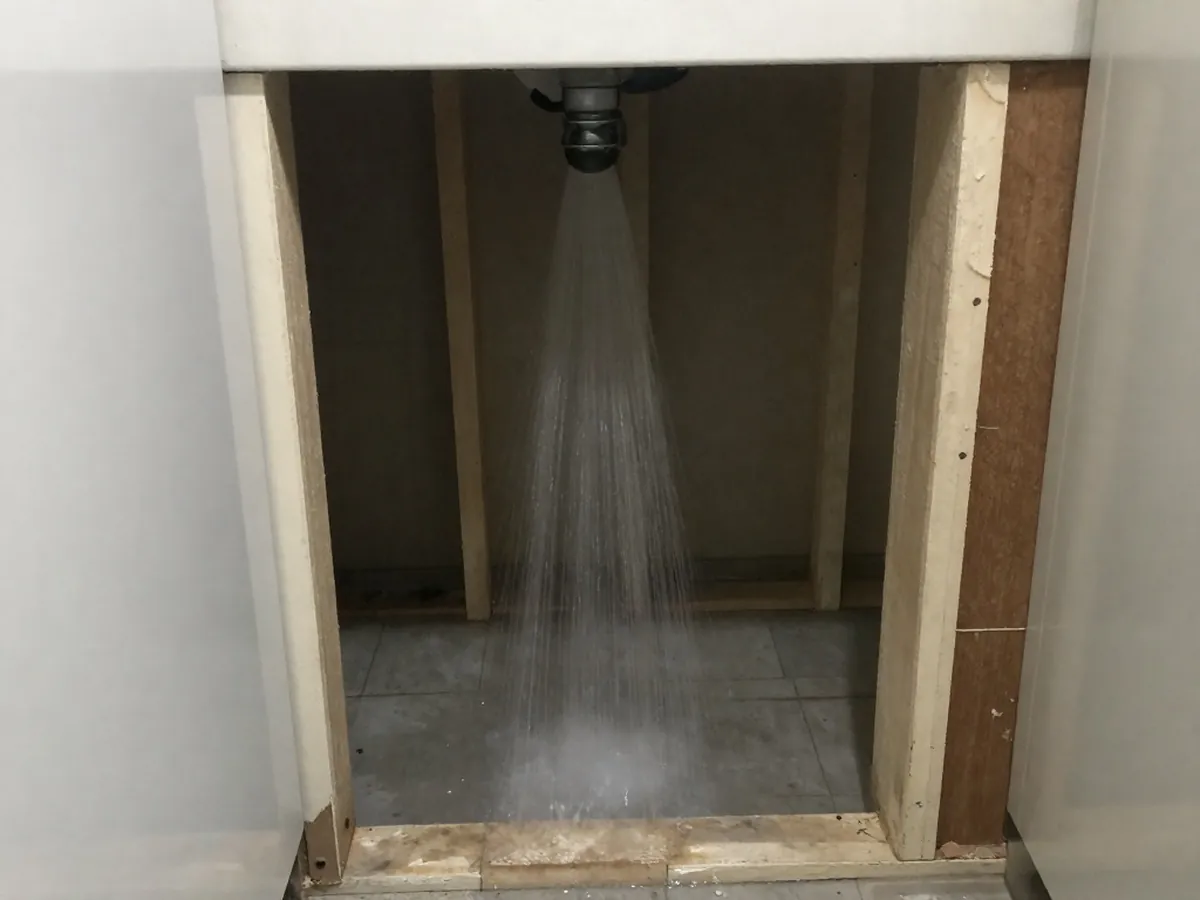 Burst Pipe Water DamageBurst pipes in Auburn, GA often announce themselves as a spray inside a wall, a drip through the ceiling below, or a…
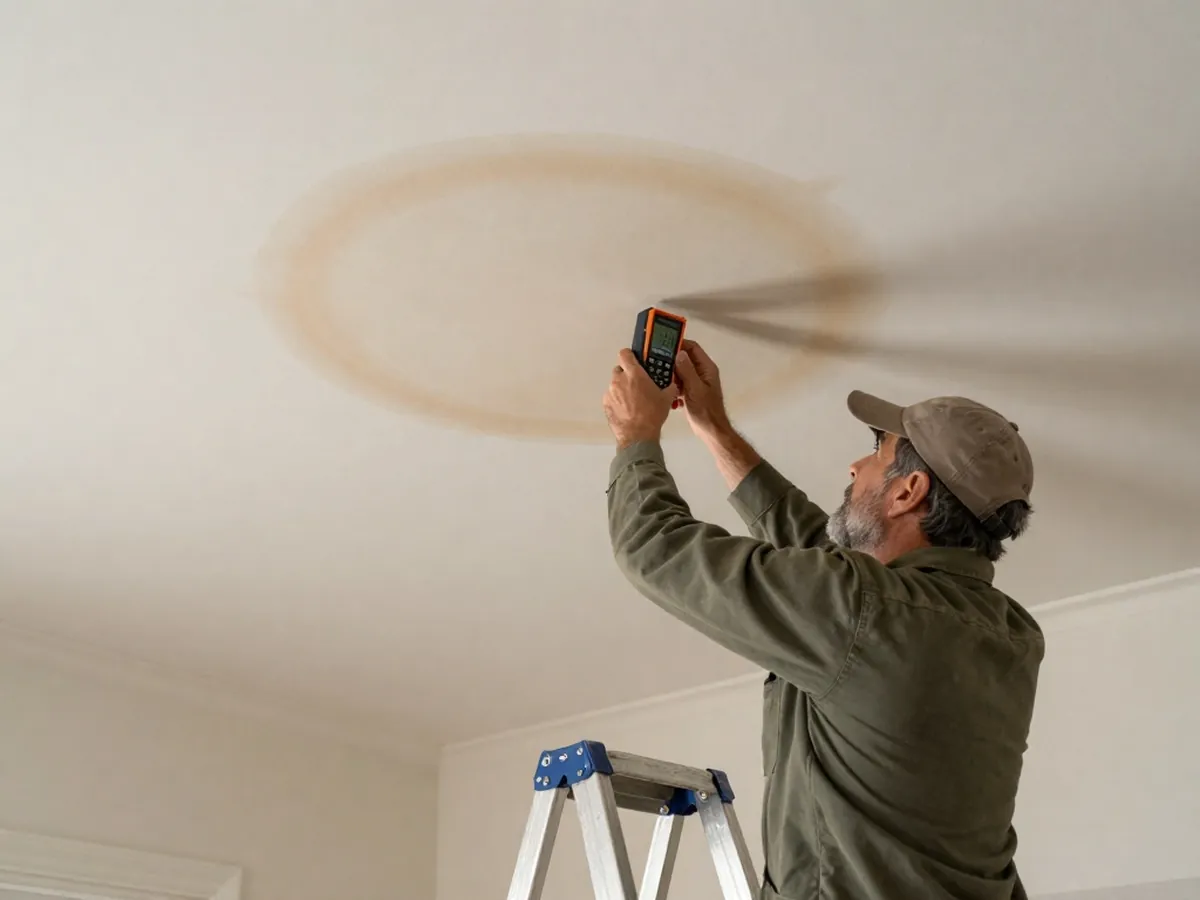 Ceiling and Wall LeaksCeiling and wall leaks in Auburn, GA announce themselves with a brown stain that keeps spreading, paint that bubbles…
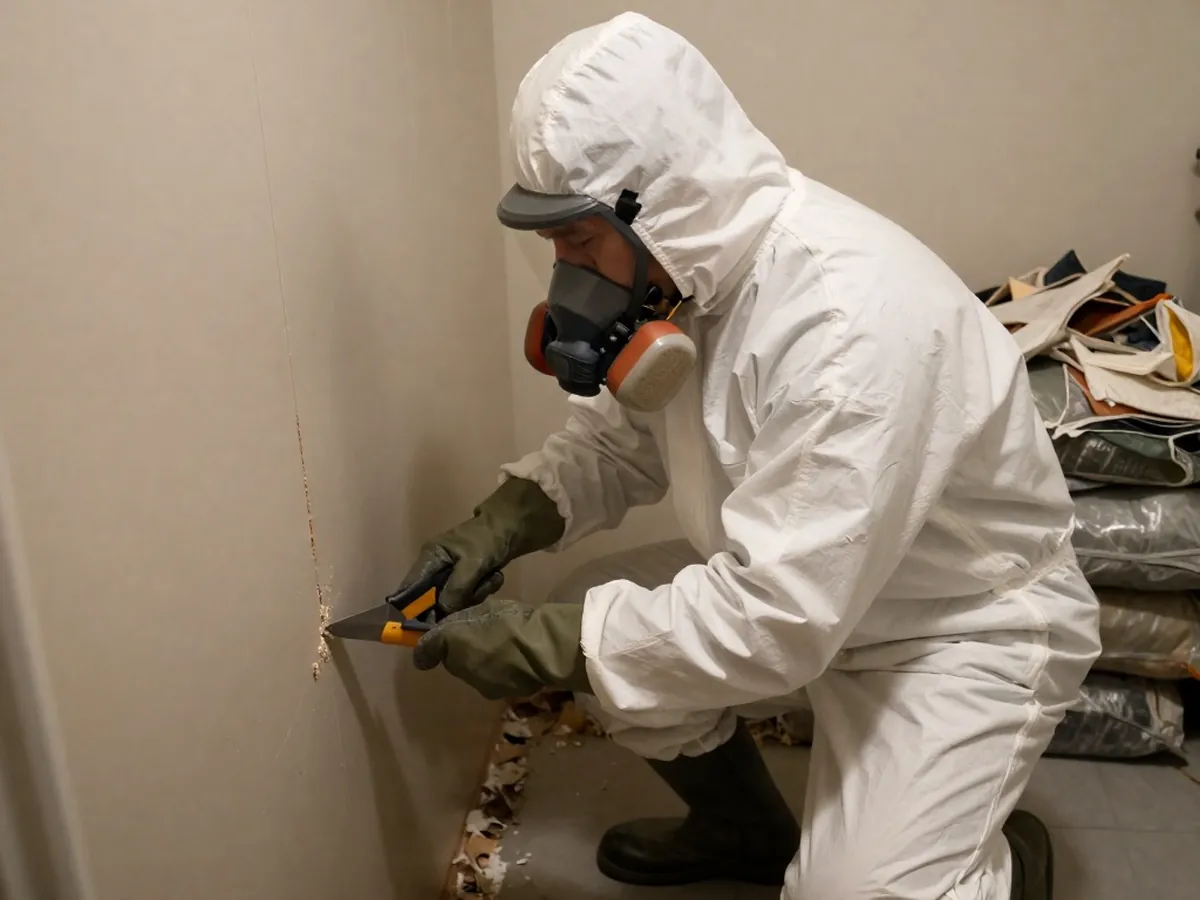 Sewage Backup CleanupSewage backup cleanup in Auburn, GA begins when a floor drain, tub or toilet pushes dirty water into the house.
Step outside and get help if
- Someone is struggling to breathe in a damp, moldy room: move them into fresh air, and phone 911 if the breathing trouble is serious.
- The wall is wet around outlets or switches: stay out of the room and leave the power to an electrician. Call 911 if anyone has been shocked.
- A wet gas appliance in a closet or utility room, with gas in the air: everyone leaves the house, and 911 or the gas utility is called from outside.
- A moldy area was soaked with sewage or floodwater: keep children and pets away, do not scrub it, and leave it to a professional.
Four ways mold gets a second chance
Cleaning the surface and leaving the leak.
Per the EPA, mold returns when the water problem stays unrepaired, which makes a cleanup that skips the source unfinished.
Closing up a wet house.
The CDC's advice is to assume mold has taken hold in a flooded house left shut for several days.
Running a flooded HVAC system.
The CDC says to have an experienced mold professional clean it before it is turned on.
Waiting on a test result.
Georgia's public health department says no enforceable state or federal standards exist for mold inspections, testing or remediation, so a test alone settles little.
Auburn-area details
Georgia's public health department says indoor air quality is not a regulated program and that its branch offers no mold services. It names leaking plumbing, poor ventilation and improper repairs among the causes.
University of Georgia Extension lists leaky pipes, gutters, roofs and window leaks among the common moisture sources, and advises keeping the air indoors beneath 60 percent humidity; the range to aim for is 30 to 50.
The EPA's cleanup page puts the do-it-yourself line at about 10 square feet and points to a professional for larger areas, for a lot of water damage, and for sewage or contaminated water.
Questions and plain answers
- How urgent is mold after a leak, on a scale of 1 to 10?
- Near the top of the scale, at 8 to 10, someone is struggling to breathe, a damp wall sits near live wiring, or sewage soaked the area. Everyone goes outside, and 911 or the utility gets the call from there. From 4 to 7 the spotting is spreading or the room smells, and the leak that fed it still needs repair. At 1 to 3, a small patch on a dry surface can be watched while the cause is found.
- Is a small patch of mold worth a phone call?
- The EPA puts the do-it-yourself line at about 10 square feet and advises people with health concerns to consult a health professional first. After sewage or a lot of water damage it points to a professional at any size. The water source has to be repaired either way.
- What keeps a room from going damp again?
- University of Georgia Extension advises keeping humidity indoors beneath 60 percent, and a reading between 30 and 50 is the one to aim for. Whatever feeds the dampness needs repair too: leaks, gutters, the roof or windows. A hygrometer gives the reading. The EPA's point is that cleaning alone settles nothing while the water problem stays unrepaired.
- Does the contractor reach Carl and Mulberry for mold work?
- Yes, the same contractor covers all three towns. Carl's page and Mulberry's page carry each town's rain and housing details. Call us and give the location of the spotting.
Details that help a mold call
- Where the dark spots or the smell are, and how large the area is
- When the water got in, and whether that leak has been repaired
- Whether anyone in the house has asthma, allergies or a weakened immune system
- A humidity reading, if you own a hygrometer
- Photos with a coin or tape measure in the frame for size
Mold work and Georgia's rules
Georgia's public health department says it offers no mold services and that mold work has no enforceable standards at the state or federal level, so it is worth asking for a written scope. The state's contractor lookup and the town desks are on the hiring and paperwork page.
Where the facts come from6
- EPA, A Brief Guide to Mold, Moisture and Your Home (updated 18 Feb 2026)
- EPA, Mold Cleanup in Your Home (updated 4 Jun 2026)
- Georgia Department of Public Health, Indoor Air Quality (updated 12 Mar 2026)
- University of Georgia Cooperative Extension, Preventing Mold in Your Home, Circular 1047-1 (1 Mar 2023)
- CDC, Safety Guidelines: Reentering Your Flooded Home (updated 24 Aug 2026)
- FEMA, What information do I need to file a home insurance claim?
Checked 1 Nov 2026