Auburn, Georgiawet houses
Water in the walls, floor or ceiling?Water damage in Auburn, GA
Standing water, soaked drywall, a sagging ceiling or sewage in a drain: call us and describe it to a local contractor who covers Auburn, Carl and Mulberry.
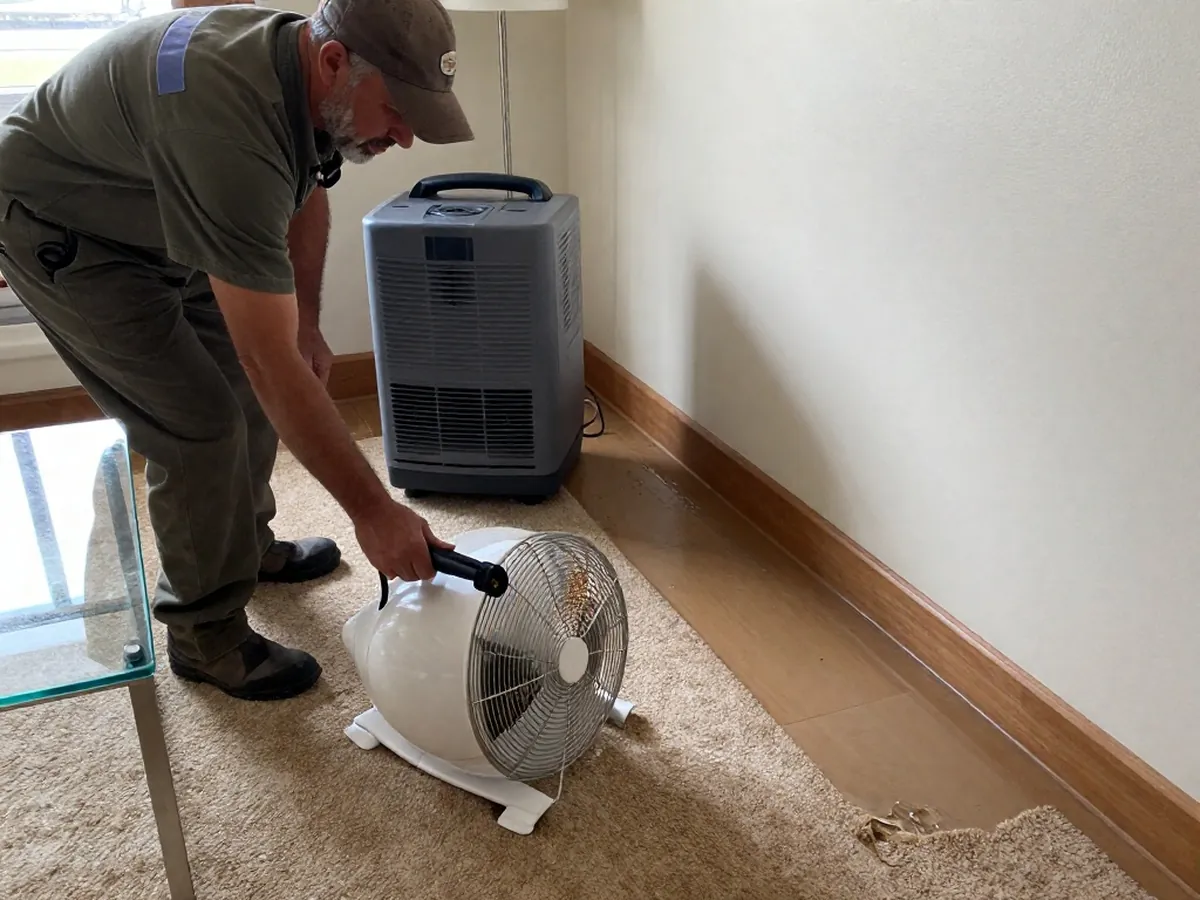
- Soaked floors
- Split pipes
- Wet ceilings
- Sewage backups
- Auburn, Carl, Mulberry
Mostly 1990s houses, with older ones mixed in
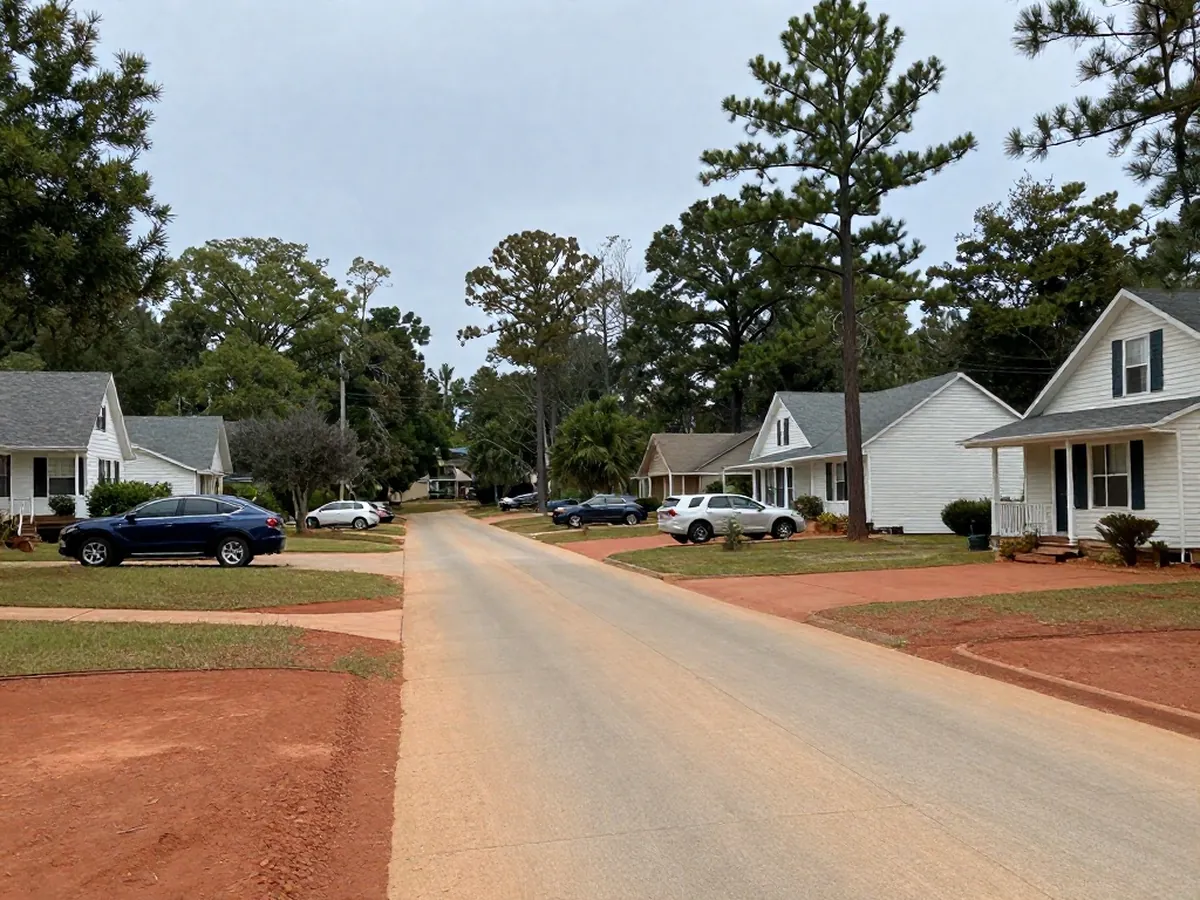
Census figures put the median Auburn house at 1994, give or take two years. Of roughly 3,233 homes in the city, 874 were built in the 1990s and 835 in the 1980s, which adds up to a little over half. Houses that age are old enough that an original washer hose or water heater is past the ages the replacement guides give.
Around Auburn's ZIP code, 30011, the median build year is 2000 and about 18 percent of occupied homes are rented. Carl runs older, with a median of 1974 in a very small sample: around 108 homes, and a wide margin of error. Mulberry's ZIP code, 30019, has a median of 2003, and about 65 percent of its houses date from 1990 through 2009.
Three towns, each with its own numbers
- Auburn water notesThe home town: a city split between two counties, with a city water office and its own rain record.
- Carl water notesA one-square-mile Barrow County town whose Town Hall is open Tuesday through Thursday.
- Mulberry water notesA Gwinnett County city, with Gwinnett's number for leaks and sewer backups.
What to have in hand when you dial
- The street address, with the closest cross street if the house is tucked away
- The room that is wet, and whether water is still coming in
- What the water has touched: carpet, drywall, cabinets, an appliance, the ceiling above or below
- Where it came from, if you know: a pipe, a machine, the roof, a drain
- Photos on your phone, taken before anything is moved
- Whether you own the place or rent it
Five moves that make a wet house worse
Wading in to reach the breaker panel.
Water and live power are the dangerous pair. The CDC's advice is to switch the main off only from a dry spot or leave that to an electrician, and never to run electrical equipment while standing in water.
Poking or cutting into a sagging ceiling.
Per the Red Cross, a sagging ceiling has absorbed water and turned heavy, and striking it can bring the whole thing down.
Waiting for it to dry by itself.
The EPA's guideline is 24 to 48 hours, and a surface can feel dry while the pad underneath or the wall behind is not.
Running fans through a house with sewage in it.
The recovery advisory written after Hurricane Sandy says not to use fans in a sewage-contaminated house.
Throwing out the evidence.
Photograph the damage first and keep receipts, in case an insurance claim follows. FEMA's checklist shows what to gather.
What people ask firstwhen the water just stopped
- What happens when I call the number on this site?
- A local water damage contractor covering Auburn, Carl and Mulberry picks up. Say the street address, which room is wet, what the water reached and whether it has stopped, and a visit to size up the damage gets set from there. Anyone renting tells the property manager or landlord first; the building and its repairs belong to the owner.
- How urgent is my wet house, on a scale of 1 to 10?
- Score it before anything else. At 8 to 10 the danger is not the wet floor itself. It is water reaching outlets or the electrical panel, sewage coming up a drain, a ceiling bulging with water held inside, or the smell of gas. Leave first, then dial 911 or the gas or power utility from outside. A score of 4 to 7 means nobody is in danger, but wet materials are soaking in. The EPA's rule of thumb is to dry them within 24 to 48 hours, so call the number on this page now. At 1 to 3, mop it up, find where it came from and watch the spot for a few days.
- Is a leak my pipe or the utility's?
- It comes down to where the pipe runs. Gwinnett County Water Resources puts any leak or backup between the house and the meter, or short of the right-of-way line, on the owner to repair. A break out at the street belongs to the utility. In Auburn the city lists (470) 606-3047 for emergency water issues only, Barrow County lists 770-307-6610 on weekends and after 4:30 on weekdays, and Gwinnett's dispatch line is 678.376.7000. Barrow's pages do not spell out where the owner's side begins.
- Auburn is in two counties. Which one is my house in?
- The City of Auburn describes itself as uniquely sited in both Gwinnett and Barrow Counties, so an Auburn address can fall in either one. The county matters for water lines, sewer and county records; fire and police calls go to 911 either way. Your water bill names the utility, and the city's utilities desk is at (770) 963-4002, extension 200.
- What do I photograph before anything gets moved?
- Wide shots and close ones, inside and out, as photos or video. FEMA's checklist for an insurance claim also wants the date, time and cause, a list of what was damaged, and receipts for anything bought to limit the damage. Keep the policy number nearby along with a way to reach the insurer. None of this promises a payout; the insurer decides that.
- How long before wet materials start growing mold?
- Nobody can name the exact hour. The EPA's guideline is to get wet materials and belongings dry inside a day or two (24 to 48 hours), and it says mold in most cases will not grow if that happens. Fans and a dehumidifier help with damp carpet and furniture. Soaked drywall or insulation is a harder case, so call us and say which of them is wet.
Match what you see to a page
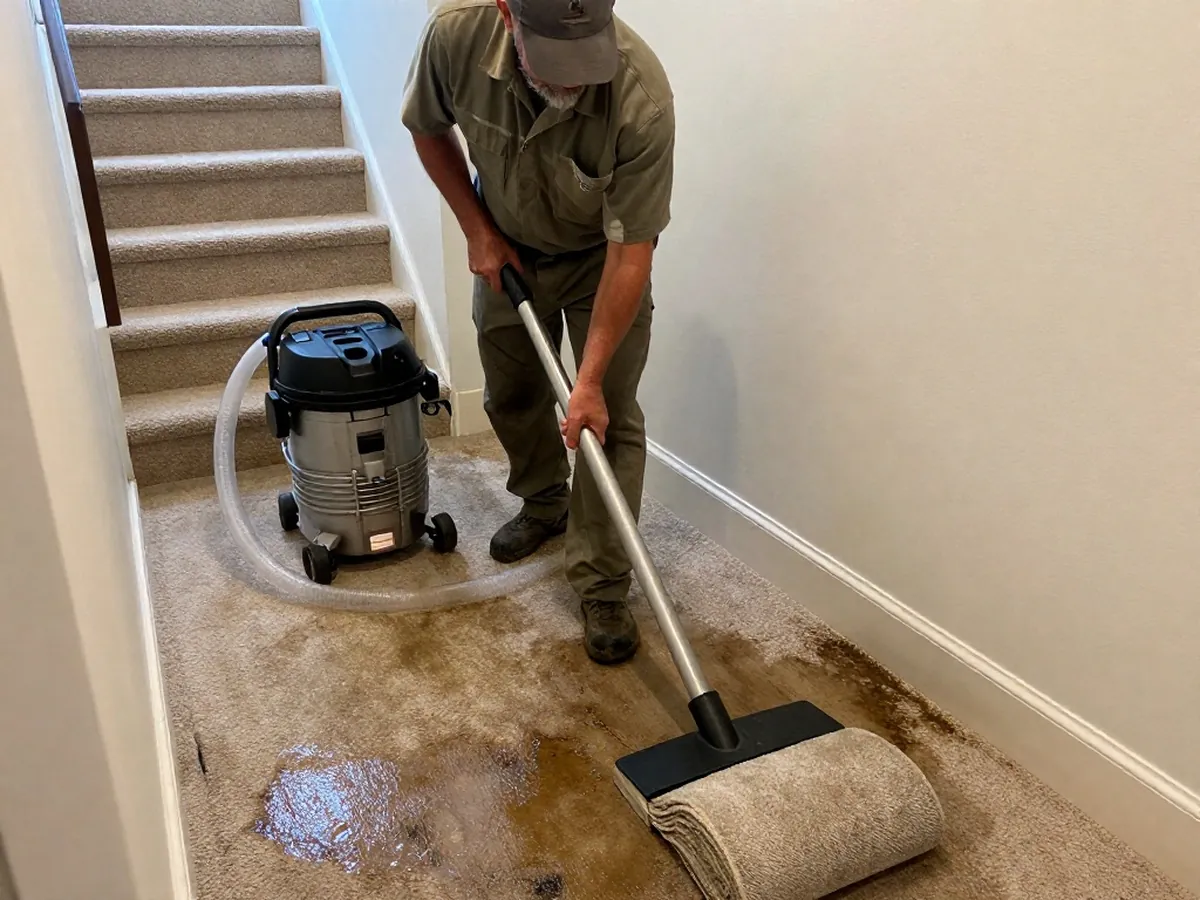 Carpet squishes underfoot after a spill or a stormWater extraction and drying
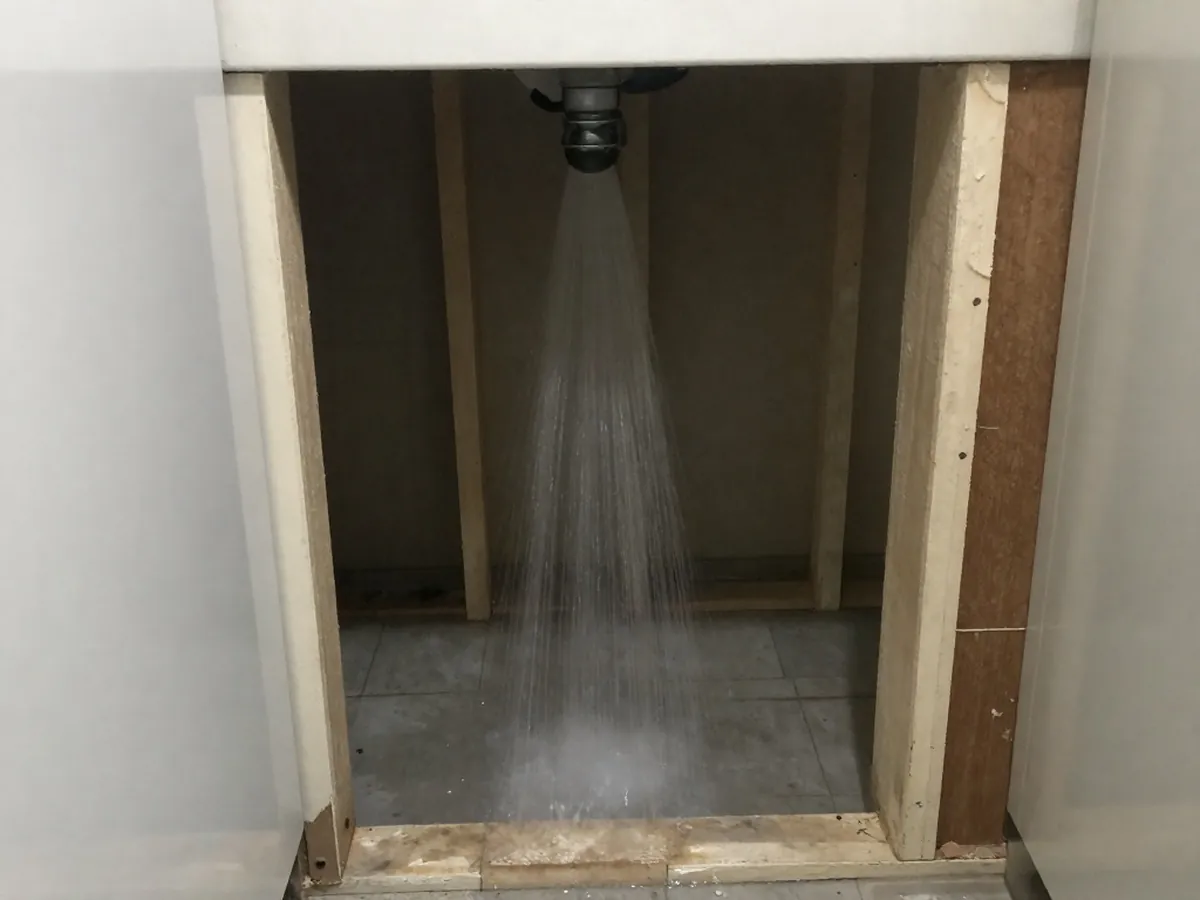 Water coming out of a wall or from under a sinkBurst pipe water damage
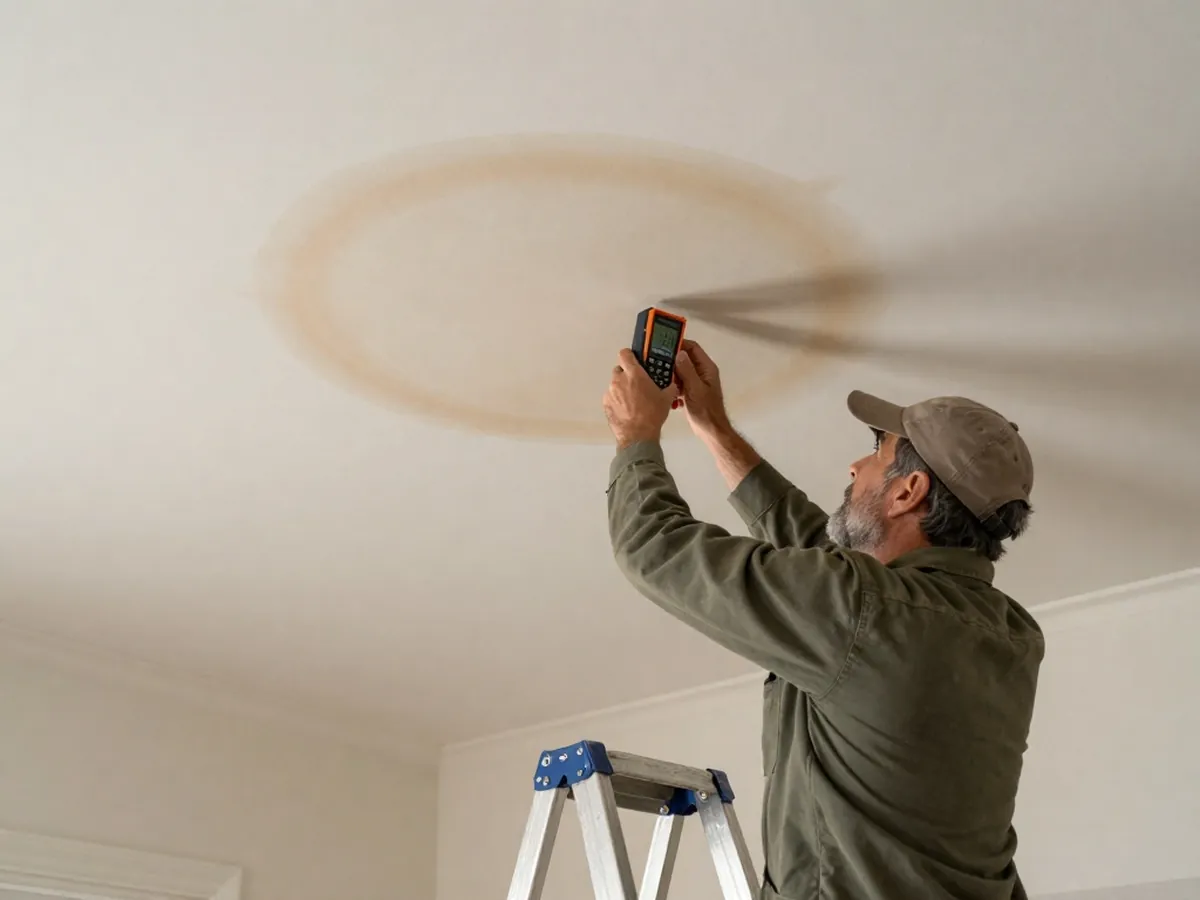 A brown stain on the ceiling, or paint bubbling above youCeiling and wall leaks
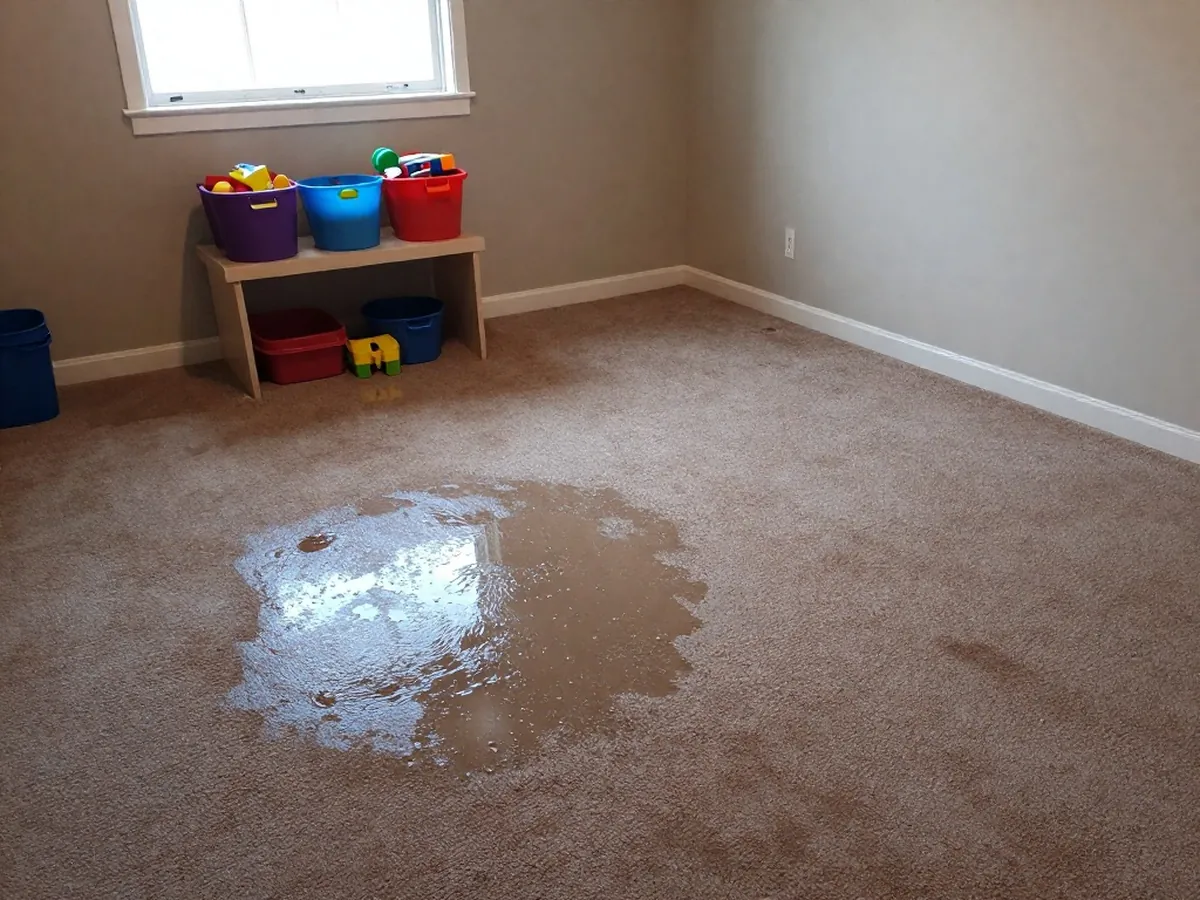 Water standing in the basement or the crawl spaceFlooded basement and crawl space
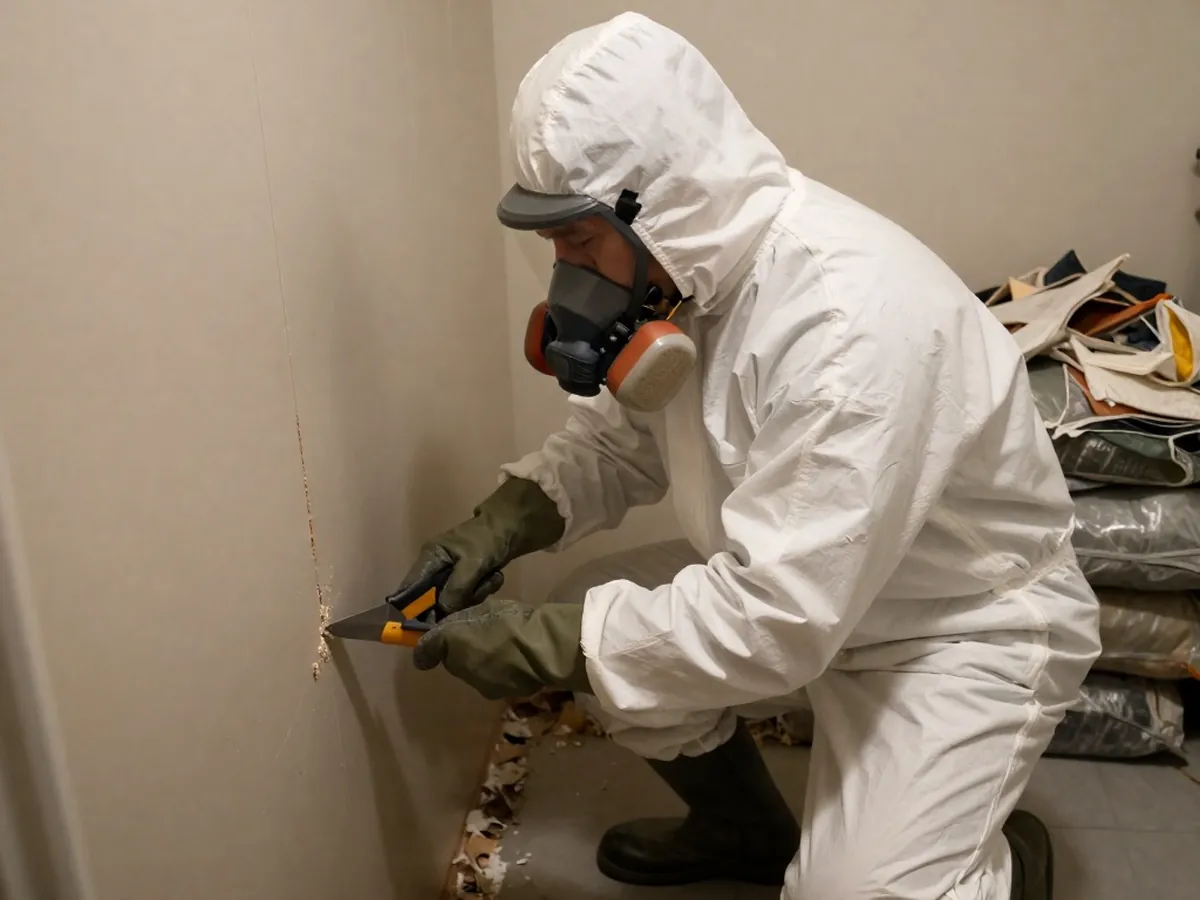 A floor drain, tub or toilet pushing water back upSewage backup cleanup
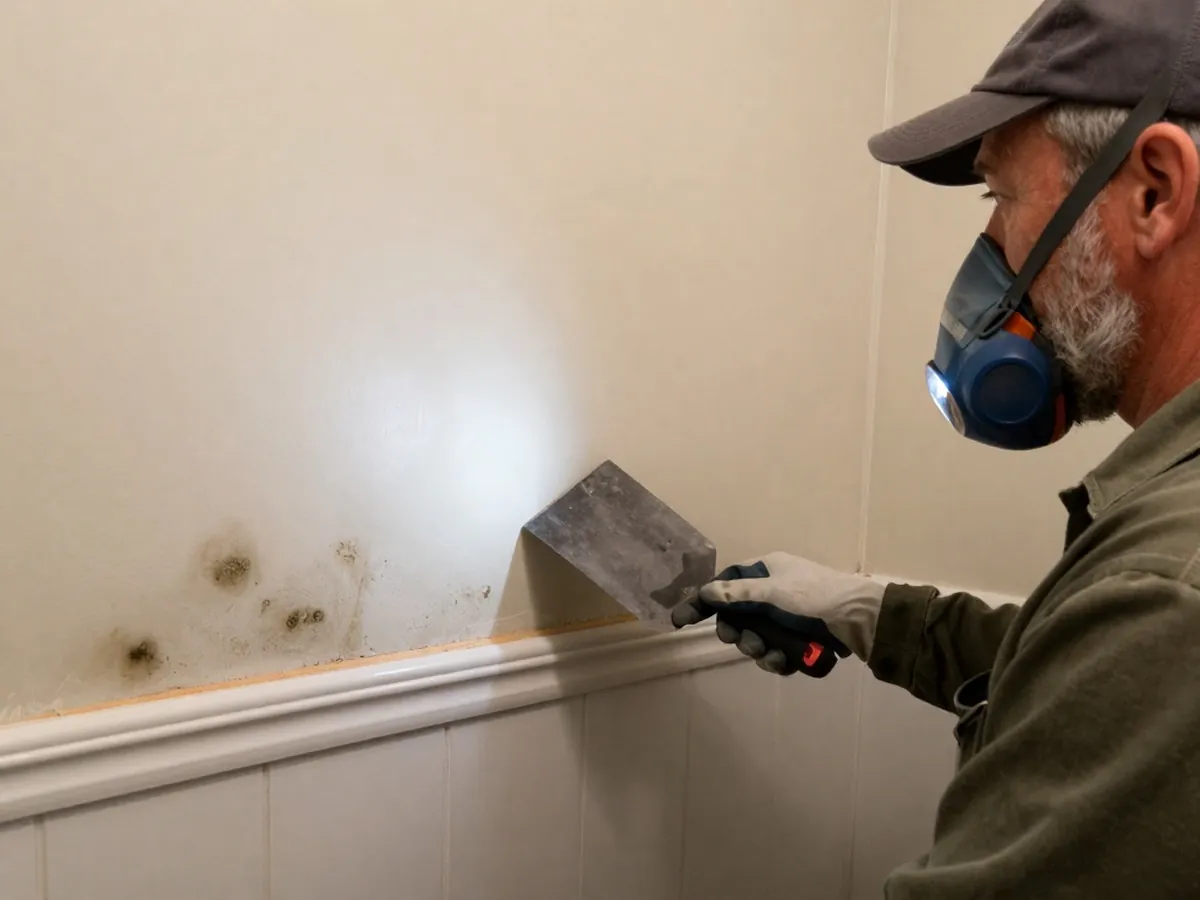 Dark spotting on drywall or baseboard near an old leakMold after water damage
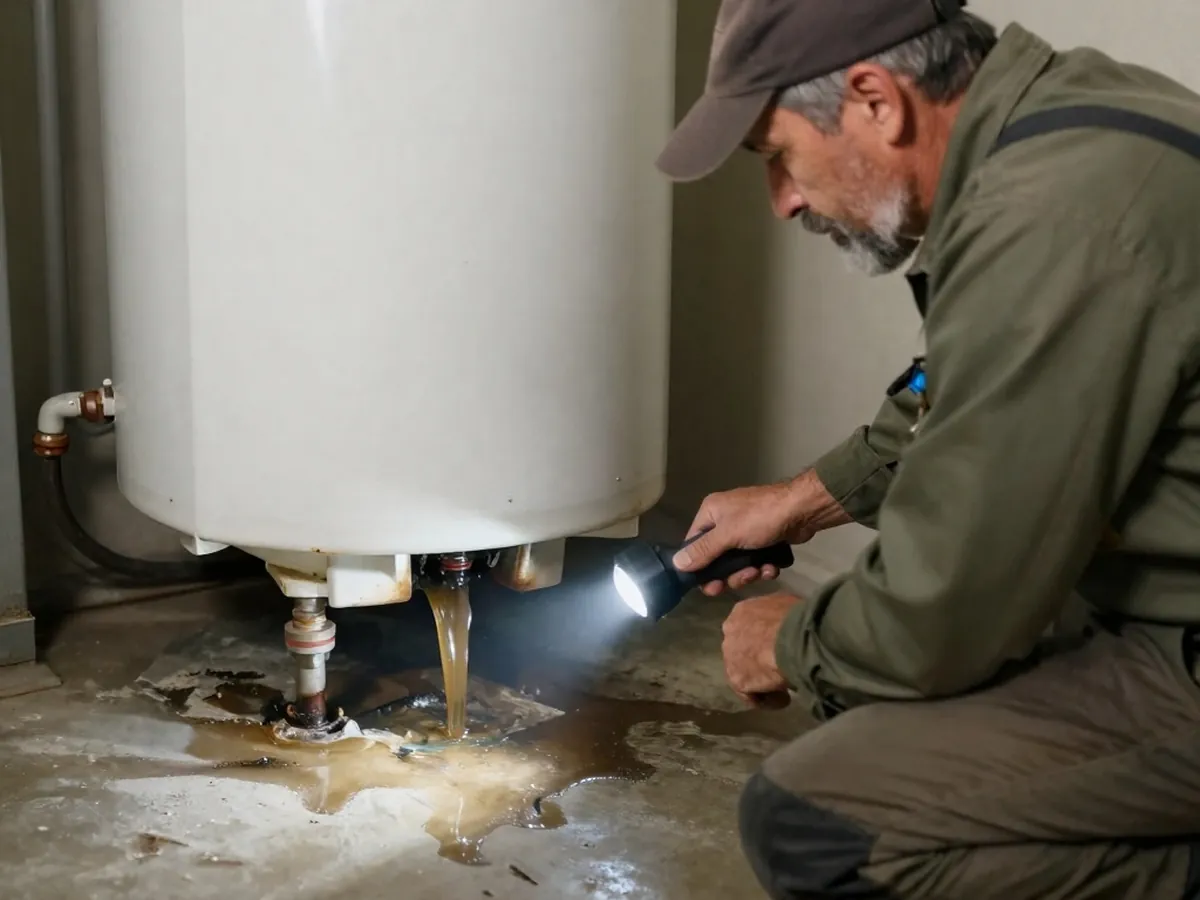 A puddle by the washer, the dishwasher or the water heaterAppliance and water heater leaks
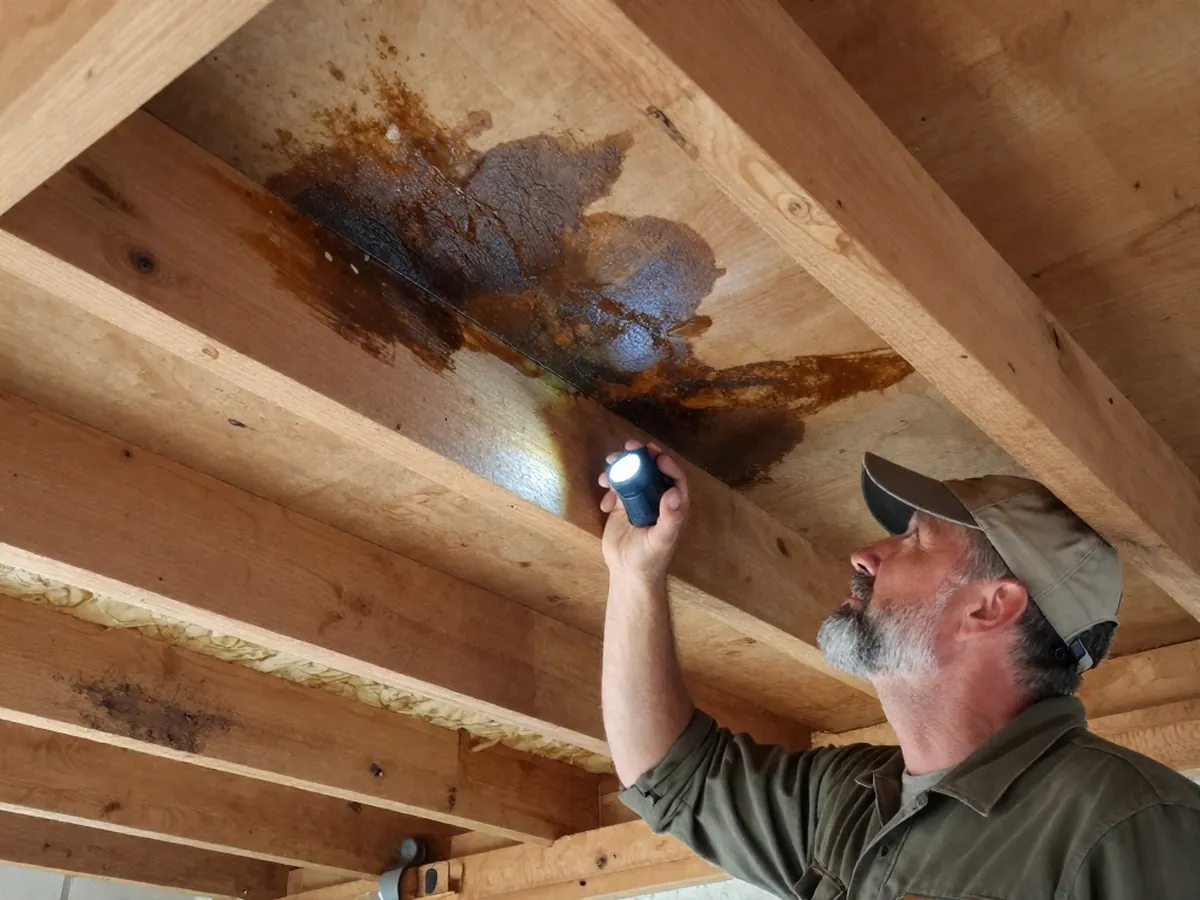 Stains in the attic or on the ceiling after rain or windStorm and roof leak damage
Answers in a sentence or two
- Can I use a shop vacuum on the water?
- No, not from a wet floor. The CDC warns against operating any electrical equipment while standing in water.
- Is it safe to run the heat or air after a flood?
- The CDC advises having an experienced mold professional clean a flooded HVAC system before it is turned on.
- Can I keep food that touched the water?
- The CDC's rule for food that touched floodwater is: when in doubt, throw it out.
- How big a mold patch can I deal with myself?
- The EPA puts the do-it-yourself line at about 10 square feet. Anything bigger, or anything after sewage, is for a professional.
- Will homeowners insurance pay?
- That is the insurer's decision. Georgia's insurance commissioner notes that most policies do not cover rain damage after a storm and that standard policies do not cover flood.
- Who handles a broken main at the street?
- The water utility, not a restoration crew. Auburn lists (470) 606-3047 for emergency water issues only.
Where the business is, and how to reach it
Cedar Auburn Water Damage Restoration is at 1520 Atlanta Hwy, Auburn, GA 30011.
The way in is the phone. Call us, name the wet room and the source of the water, and a local contractor covering Auburn, Carl and Mulberry takes it from there.
Where the facts come from16
- U.S. Census Bureau, American Community Survey 2020-2024 5-year, table B25034 (year built), Auburn city
- U.S. Census Bureau, American Community Survey 2020-2024 5-year, table B25035 (median year built), Auburn city
- U.S. Census Bureau, American Community Survey 2020-2024 5-year, table B25035 (median year built), ZIP 30011
- U.S. Census Bureau, American Community Survey 2020-2024 5-year, table B25003 (owners and renters), ZIP 30011
- U.S. Census Bureau, American Community Survey 2020-2024 5-year, table B25034 (year built), ZIP 30019
- City of Auburn, About Auburn
- City of Auburn, Utilities
- Gwinnett County, Department of Water Resources, Report a Problem
- Barrow County, Wastewater Division
- CDC, Safety Guidelines: Reentering Your Flooded Home (updated 24 Aug 2026)
- EPA, A Brief Guide to Mold, Moisture and Your Home (updated 18 Feb 2026)
- FEMA, What information do I need to file a home insurance claim?
- American Red Cross, Checking Your Home: Structural Elements
- Georgia Office of Commissioner of Insurance and Safety Fire, Safety Tips for Hurricanes
- Initial Restoration for Flooded Buildings, a Hurricane Sandy Recovery Advisory (archived on EPA's site; publisher and date not stated on the page)
- Charleston Sanitary Board (West Virginia), Preventing Leaks and Floods in your Home
Checked 1 Nov 2026