The first hour in a wet house: a checklist for Auburn, Carl and Mulberry
The water has stopped, or it has not, and the carpet is soaked. This is the order to work in: people and power first, then the water, then pictures, then air, then the question of what stays.
Start with the people and the power
Check where the water is before checking what it ruined. When it touches outlets, cords or the panel, the CDC's guidance comes down to three points. Cut the main power only from a dry spot. Bring in an electrician when that is out of reach. Never wade through standing water toward the switch. The same guidance rules out flipping power on or off from a wet floor, or running an electric tool or appliance there.
A gas smell ends the checklist. Per the CDC, the order is main gas valve off, windows open, everyone out at once, then word to the gas company, police or fire department, with no sparks created along the way. Atlanta Gas Light's leak line is 877.427.4321, and its page says to call from away from the leak. If unsure, step outside and phone 911.
Stop the water you can stop
A supply line or hose that is still running gets shut at its valve, or at the main. The University of Georgia field report urges readers to locate the main water cutoff ahead of time, which is easier on a dry day. If the meter is the question, the EPA's WaterSense program suggests noting the reading, running no water in the house for two hours, then reading it again.
Water coming from the street, a main or the meter side is the utility's problem. Auburn lists (470) 606-3047 for emergency water issues only, Barrow County lists 770-307-6610 after hours, and Gwinnett's dispatch line is 678.376.7000.
Take pictures before anything moves
FEMA's list of what an insurer needs starts with photos and video, inside and outside the house. It also asks for the date, time and cause, a description of the damage, an inventory of what was damaged, and receipts for anything bought to limit the damage. Keep the policy number close, along with a way to reach the insurer.
The Red Cross makes the same point in fewer words: photograph the damage, save the receipts and cover holes as a temporary repair. Nothing on this page promises that a claim will be paid. That decision belongs to the insurer.
Get the air moving, and know what to leave alone
The CDC says to start drying as soon as possible with fans and dehumidifiers and to point the fans outward. The EPA's guideline for wet materials and belongings is 24 to 48 hours, and it is a guideline for the general case, not a deadline written for any one house. The CDC adds that a house is ventilated for at least 30 minutes before anyone stays long.
Sewage changes the list. The Hurricane Sandy advisory says not to use fans in a sewage-contaminated house, and that bleach can corrode and does less on dirty surfaces. A flooded heating and cooling system waits for an experienced mold professional to clean it before it runs, says the CDC.
Decide what stays and what goes
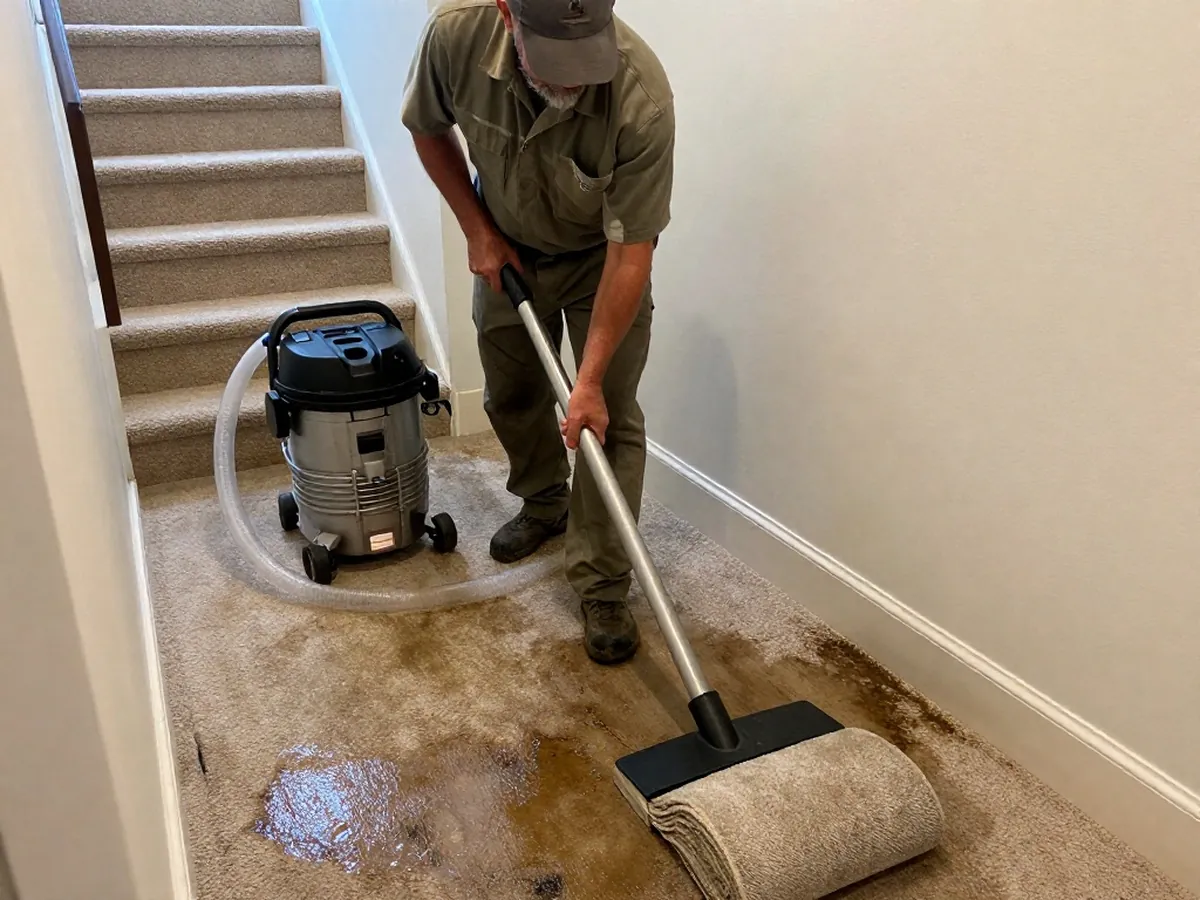
The Red Cross says absorbent items that cannot be cleaned, such as mattresses and carpeting, are thrown out. The CDC's rule for food that touched floodwater is when in doubt, throw it out, and suspect water is not used for dishes, teeth or food.
The Sandy advisory is blunt about materials soaked by contaminated floodwater: wet carpet and padding come out with the tack strips, soaked drywall is cut out, and fibrous insulation is removed. A clean-water leak caught early is a gentler case, and a contractor with a moisture meter can say which one a house has. The advisory treats wood framing as dry at 15 percent or less on a meter.
Not sure which of these fits your house?
A ceiling that bulges is covered on ceiling and wall leaks, and water rising from the ground on flooded basement and crawl space. Whichever it is, the next step is a conversation.
Call us and describe the room, the water and what you have already done.
The same hour, as a list
- Look for water at outlets, cords and the panel before stepping in
- Smell for gas; if there is any, get everyone out and use 911 or the gas utility from outdoors
- Shut off the water at the valve or the main if the source is still running
- Keep children, pets and anyone unwell out of gray or brown water
- Photograph and film the damage, wide and close, before moving anything
- Write down the date, time and cause, and start a list of what was damaged
- Start fans and a dehumidifier with the fans pointing outward, unless sewage is involved
- Set aside absorbent items that cannot be cleaned for the contractor to look at
- Keep receipts for anything bought to limit the damage
- Reach the contractor and the insurer; a tenant gets word to the property manager or landlord before either
Where the facts come from13
- CDC, Safety Guidelines: Reentering Your Flooded Home (updated 24 Aug 2026)
- Atlanta Gas Light, Contact Us
- University of Georgia CAES Field Report, Winterize outdoor pipes now, before they freeze (31 Oct 2007)
- EPA WaterSense, Fix a Leak Week (updated 13 Mar 2026)
- City of Auburn, Utilities
- Barrow County, Wastewater Division
- Gwinnett County, Department of Water Resources, Report a Problem
- FEMA, What information do I need to file a home insurance claim?
- American Red Cross, Safety Steps for Returning Home After the Flood (21 Sep 2018)
- EPA, A Brief Guide to Mold, Moisture and Your Home (updated 18 Feb 2026)
- Initial Restoration for Flooded Buildings, a Hurricane Sandy Recovery Advisory (archived on EPA's site; publisher and date not stated on the page)
- EPA, Mold Cleanup in Your Home (updated 4 Jun 2026)
- American Red Cross, Checking Your Home: Structural Elements
Checked 1 Nov 2026